Wednesday, 1 March 2023

GA4 ‘auto-migration’: Here’s why you should opt out

Google will start automatically configuring your Universal Analytics properties to Google Analytics 4 (GA4) for you. But you actually do not want to do this for many reasons.

Is your GA4 already set up? You might still be subject to “auto-migration.” Read on for more details about it and how to opt out.

Making the switch to GA4

On February 9, Google sent an email saying they will soon start configuring Google Analytics 4 for users starting in March (as early as this week).
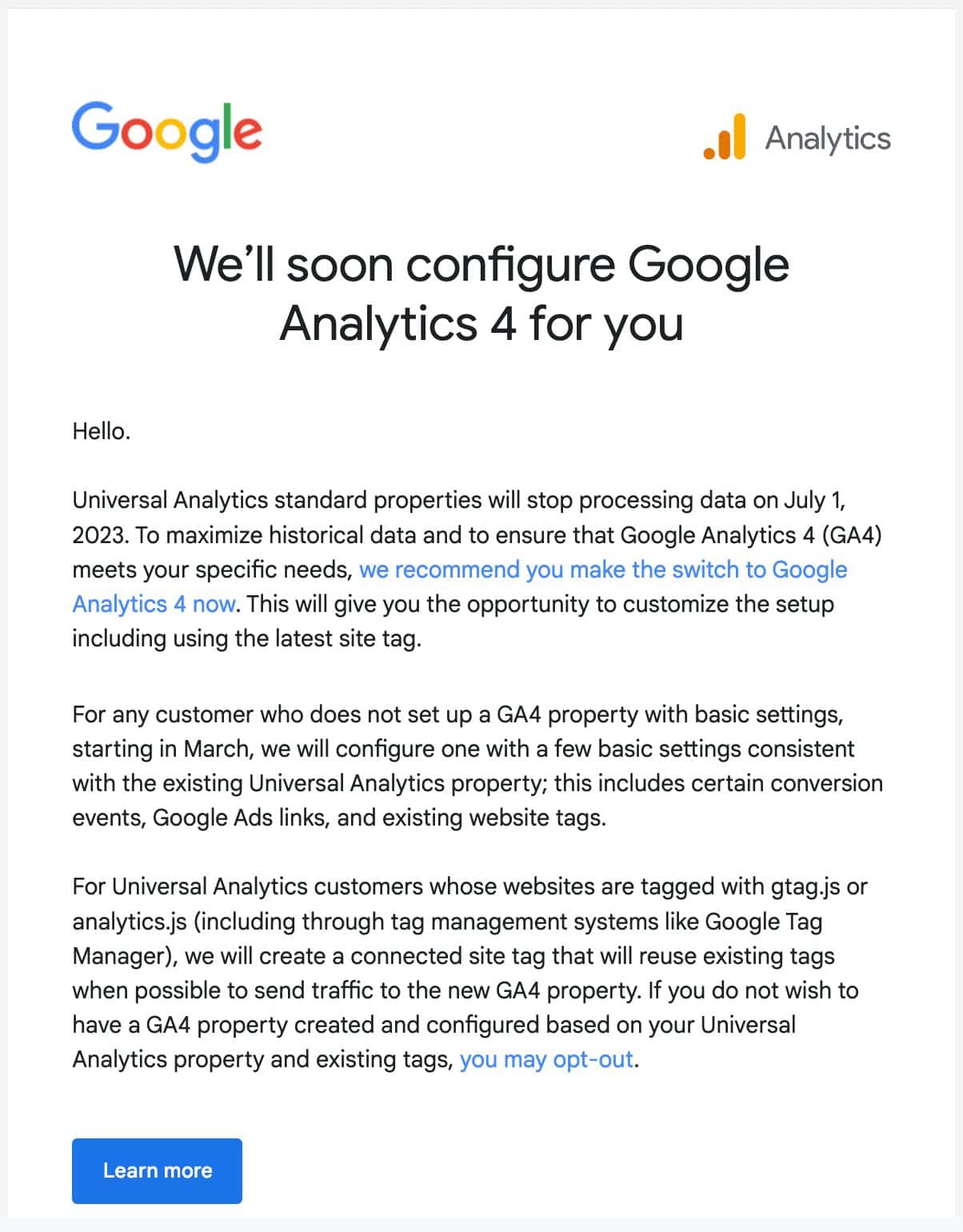
GA4 automigration email

This means that if you have a Universal Analytics (UA) property but haven’t migrated to GA4, Google will create a GA4 property for you based on many of the settings you have in UA, such as your goals, audiences, Ads links, users, and more.

But what is Google’s definition of “haven’t migrated”?

Scenario 1: You have a UA property and have not set up a GA4 property. The UA property is not opted out of the auto-migration setting.

This will be a common scenario for people who haven’t had the time or don’t want to set up GA4. This is essentially the “long tail” of customers Google wants to keep on GA.

If you just didn’t have the time or desire to do the migration, perhaps this isn’t a bad option for you. But be aware that your data may look quite different. (More details on how the migration works below.)

Scenario 2: You have created a GA4 property but haven’t linked it to a UA property. Google doesn’t know it’s the same as your UA property and doesn’t consider this migrated.

Have you seen this popup modal in GA4? Likely yes, because it pops up every time you log in or refresh.
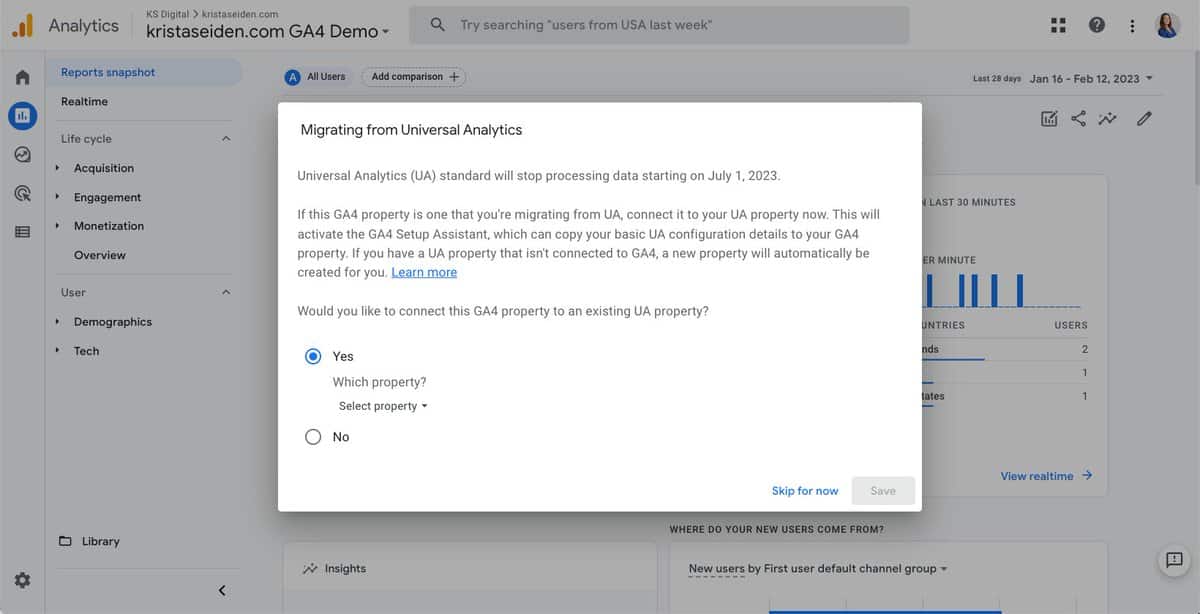
GA4 property migration popup

What does linking do? It tells Google that you have created a GA4 property tied to a UA property.

Will that stop Google from automigrating you?

Not necessarily.

That will depend on how much of the GA4 setup assistant you have completed (more on that in a moment).

Scenario 3: You have created a GA4 property and linked it to a UA property but haven’t completed all GA4 Setup Assistant steps.

If you’re not opted out of migration in UA, then Google will start filling in the gaps for you in this scenario.


Get the daily newsletter search marketers rely on.

Processing…Please wait.


Using the GA4 Setup Assistant

The GA4 Setup Assistant is a 12-step tool that helps you track your GA4 migration progress.

It has some pretty useful tools included, such as help with audience migration and a more straightforward process for Google Ads linking.
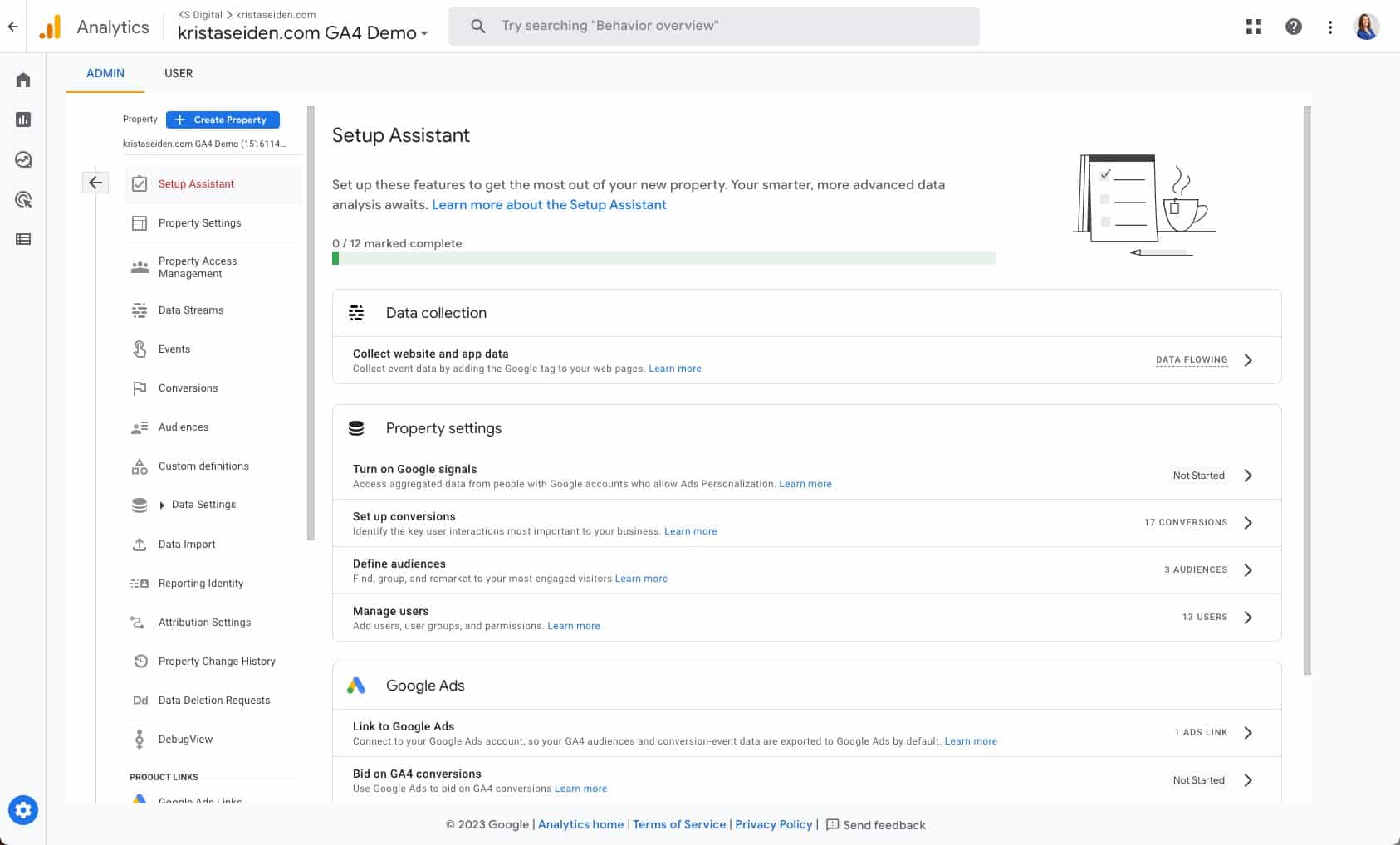
GA4 Setup Assistant

Ads linking

Generally, you must have dual admin access, meaning you must be an admin on both the Analytics and Ads accounts to link. It can be frustrating and time-consuming to ensure you have the right access levels.

The setup assistant tool references the links you have in UA and does not require admin access to Ads to link. This is great if you are having someone not typically involved in Ads helping you migrate, such as a contractor or agency.

GA4 Setup Assistant Google Ads linking

Once you click Import from Universal Analytics, a new screen shows you all of the Ads links you have set up in UA.

You can check or uncheck the boxes for what you want to import to GA4 and then hit Import selected Ads links. It's as easy as that.

GA4 import Ads links

Conversions

The tool will reference your conversions in UA and check if they are eligible (i.e., event or destination goals) for migration to GA4.

Goals using other goal types or regex are not currently eligible for migration, but maybe in the future.

GA4 Setup Assistant conversions

This migration screen is similar to the Ads linking screen. Check the eligible goals you want to migrate to GA4 conversions. Ineligible goals will be grayed out.

You have the option to change the name of the conversion. I recommend leaving it in the underscore format.

GA4 import existing goals

Users

This one isn't as flashy, but if you have a lot of users with access to your UA property that you want to copy to GA4, it may be the most helpful tool.

When you select Import from Universal Analytics, it will send you to a help center article detailing the process.

You will need to use a Google Sheets Add-on tool for this. It sounds like work, but it's quite quick and painless. The help center article gives great step-by-step instructions on how to use it.

Why some users might want to opt out

Back to the warnings I have in store for you...

Let's say you fall into Scenario 3 (that is, you have created a GA4 property and linked it to a UA property but haven't completed all GA4 Setup Assistant steps).

Whatever you have not marked as complete in the GA4 Setup Assistant tool will be done for you.

This is where, in my opinion, things can get pretty sketchy fast.

GA4 Setup Assistant - Incompletea

Yes, I just told you the Setup Assistant has some useful tools. But they are helpful because you can control the migration yourself.

For all 12 steps in the Setup Assistant, you must mark them Complete even if you have not done them – unless you want Google to do it.

This is especially important for these seven steps:

  • Turning on Google Signals.
  • Setting up Conversions.
  • Defining Audiences.
  • Managing Users.
  • Linking to Google Ads.
  • Bidding to GA4 conversions.
  • Targeting ads to GA4 audiences.

Let's break a few of these down:

Linking to Google Signals

Google Signals is required for remarketing/retargeting with Google products. But some countries may have legal implications or restrictions, so I'd suggest checking with your legal team to be sure.

Managing Users

I just said how much I like this feature. But with great power comes great responsibility. You should check the access being granted, as there may be users you do not want to migrate. If you let Google do it, they'll migrate everyone from UA.

Bidding to GA4 conversions

This is where the real danger begins. If you let Google migrate your conversions for you, and you haven't checked them, you're taking their word that you are still considering the actions from UA that they could migrate to be important.

Then, if you let Google bid to those conversions in Ads, they are changing the goals from UA to GA4 conversions that you are spending real money against.

If you didn’t set up those conversions, you risk an automated process spending your money in a way you may not want or that is not optimized toward your current goals.

Targeting Ads to GA4 Conversions

Same concerns as above. You would have Google migrate audiences for you, hoping they are good enough, and then bid toward them with your money. Your oversight is taken out of the process.

So what will migration look like?

For some things, like conversions, they may append a UA_ to the name of the conversion in GA4 to indicate that it came from UA. Other things may not have any indication of where they came from.

Convinced? Here's how to opt out

So are you convinced yet that you should opt out of automigration? Here’s how.

In your Universal Analytics account, go to Admin > Property column > GA4 Setup Assistant.

Scroll to the bottom and toggle off the switch for "Automatically set up a basic GA4 property."
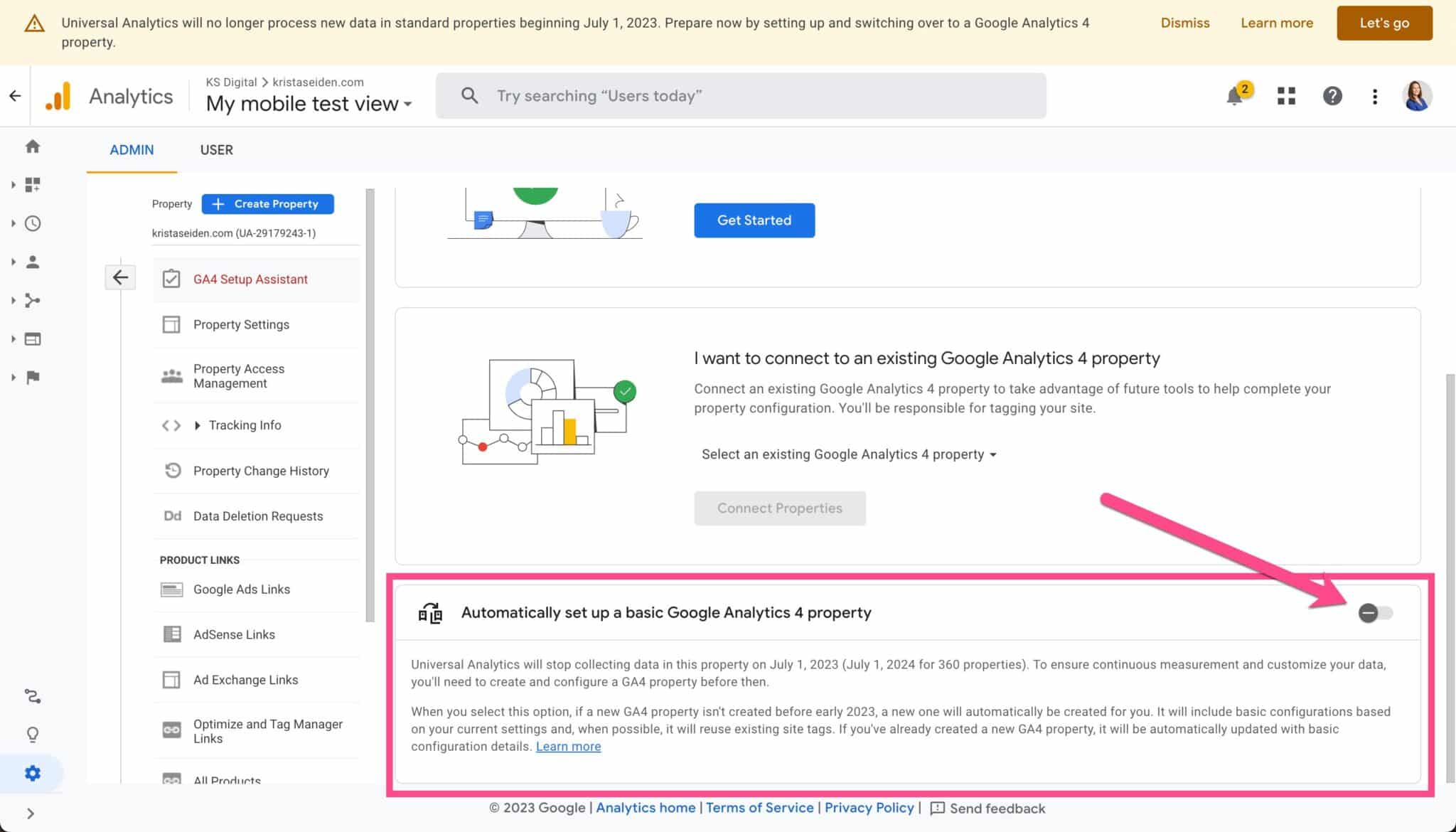
GA4 automigration opt-out

Opting out will prevent the UA property from being migrated.

If you don't opt out but are linked (that popup modal we keep getting), then you will need to Mark as complete all 12 steps (or whatever you don't want automigrated) in the Setup Assistant in your GA4 property.

If you do not opt out or do not mark all as complete, Google might migrate some or all of your UA property to a GA4 property starting as early as this week.

The more complicated your UA property, the later it will be migrated since they’ll likely start with simpler properties.

The post GA4 ‘auto-migration’: Here’s why you should opt out appeared first on Search Engine Land.


via Search Engine Land https://ift.tt/I0M5e4p

How to set up Google Analytics 4 using Google Tag Manager

Google Analytics 4 offers a robust, event-based approach to tracking website activity.

However, the deprecation of Universal Analytics has forced many marketers to relearn their favorite analytics platform, using a dramatically different interface and walking through a new setup process.

Event and conversion setup also comes with a higher learning curve.

Thankfully, Google Tag Manager (GTM) can ease the process of setting up GA4 on your site and reduce the dependency on needing to customize code.

This article will show you how to deploy the basic GA4 tracking code through GTM, along with how to create custom events for more comprehensive data.

How to set up the main GA4 code

The gtag.js tag is the basic tracking code you need to place on your site. Once you fire this for all pages, you’ll start recording all the default data GA4 tracks for website visitors.

GTM makes setting up this tag as simple as a few clicks and pasting in an account ID. 

Note: If you already have a Universal Analytics tag (analytics.js) firing on your site, you can keep it active alongside GA4. However, per Google, Universal Analytics will stop recording data on July 1, 2023 (GA360 properties will record through July 1, 2024). Data will be accessible for at least six months after this point.

Step 1

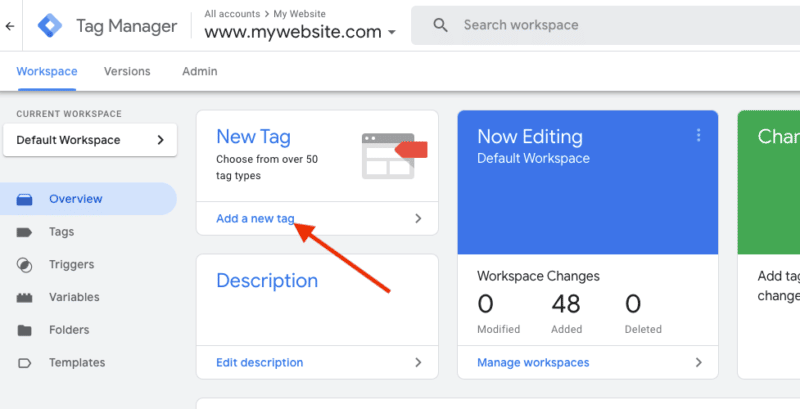
To start setting up your GA4 tag, navigate to your desired account and container within GTM and select “Add a new tag.”

Step 1 - Add a new tag

Step 2

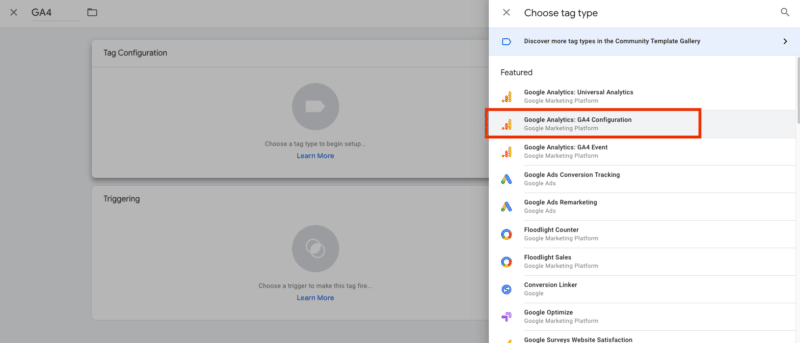
Now, click on “Tag Configuration” to see the options for various types of tags. Select Google Analytics: GA4 Configuration.

Step 2 - GA4 tag configuration

Step 3

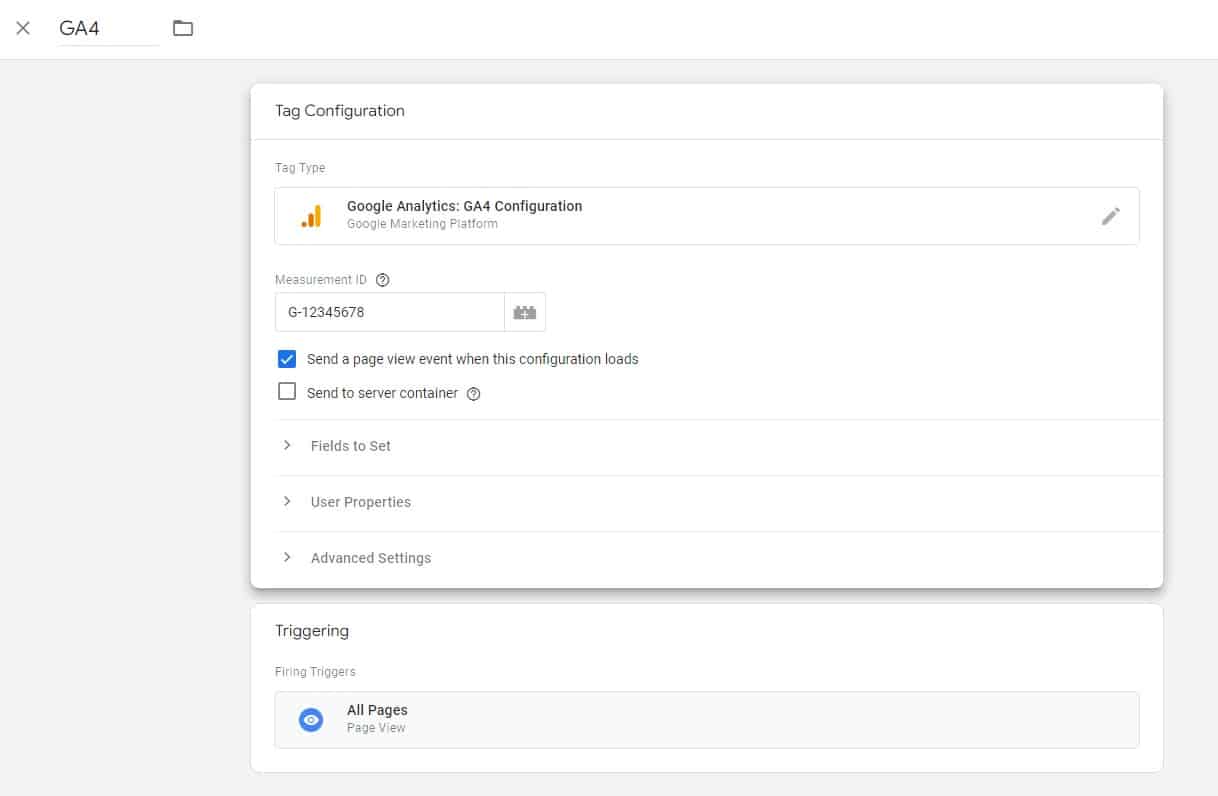
You’ll see a field to enter your Measurement ID. Find your Measurement ID in your account, and paste it here.

Once you’ve saved this tag, you’ll be able to select it from a dropdown in the future when setting up GA4 events instead of having to manually hunt for the ID each time.

For most users, you’ll want to leave the box checked to “Send a page view event when this configuration loads.” This will ensure that each time a user visits a new page, a pageview is tracked on GA4’s end.

There may be some more advanced instances where you don’t want to fire a pageview. (For instance, if you’re using a tag to set properties for a logged-in user or a customer completing a transaction without the page URL changing.)

Step 3 - Send a pageview event when configuration loads

Step 4

Click within the “Triggering” box to choose where you want the tag to fire on your site. In most cases, you’ll likely want GA4 to fire on all pages.

However, depending on your setup, you may want to exclude certain pages, such as private login sections.

You can create rules based on URL paths, clicks on specific page elements, and more to customize exactly where the tag fires. 

Step 5

Save your tag and publish your GTM container to push it live. You should now see GA4 firing on your site.

To double-check that you’re actually tracking sessions, check the Realtime section of Google Analytics. You should see your own visit reflected here soon after hitting the site.

Step 5 - Realtime overview

With the basic gtag.js tag in place, you can set up additional customization, such as adding events. 


Get the daily newsletter search marketers rely on.

Processing…Please wait.


Setting up event tracking for GA4 in Google Tag Manager

Building off of its core focus on event-based measurement, GA4 comes with built-in event tracking for a few site interactions that previously required custom setup in Universal Analytics.

Directly within the GA4 interface, you can enable Enhanced Measurement to fire events for scroll activity, outbound clicks, file downloads, and video views.

GA4 enhanced measurement

However, note that there are still limitations to these events compared to more advanced tracking options you can set up through GTM.

For instance, the scroll tracking option simply triggers a "scroll" event once the user reaches the bottom of the page (measured at the 90% point). By default, you won't be able to track when the user starts to scroll to earlier points of the page.

However, using GTM, you can fire events with specific parameters for different scroll thresholds on the page (such as 25% / 50% / 75% / 100%) for a more comprehensive analysis.

The beauty of GTM lies in the ability to easily fire events for a vast array of actions that users could take on the site.

We'll use scroll tracking as an example event setup here, but note that you can use the GA4 Event tag to create events for any triggers available in GTM.

Step 1

To start, create a new tag with a Tag Type of "Google Analytics: GA4 Event." Choose your GA4 ID under "Configuration Tag." 

Step 1 - GA4 scroll event

Step 2

Next, enter the Event Name that you'd like to appear within the Google Analytics interface. In this case, we're using "scroll" to align with the existing "scroll" event that GA4 tracks.

Step 3

Click on the Event Parameters section to expand it. Here, we can add a custom parameter to send further details about the event to Google Analytics.

In this case, we'll send through percentage values for when people scroll to specific points on a page.

Step 4

We'll use "scroll_depth" for the Parameter Name.

Next, the value will be , a variable within GTM that will pull in the scroll percentages as people interact with the page and data is sent back in.

Step 5

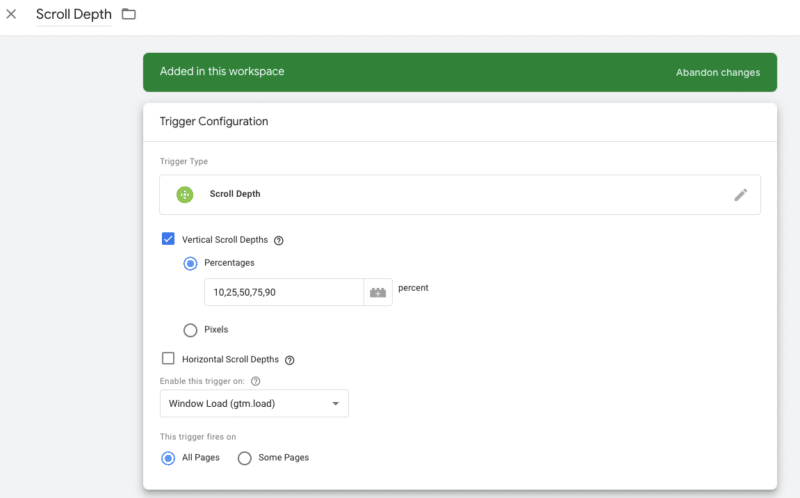
We'll need to create a trigger to determine the values we want to track. Click in the bottom Triggers section to start a new trigger, and select Scroll Depth Trigger. 

You can then choose vertical or horizontal scroll depth and select between tracking based on percentages or pixel depth.

With the variety of screen sizes people may be browsing from, the percentage option is likely your best bet here. Add the numbers for the scroll points you want to track, separated by commas.

Step 5 - scroll depth trigger configuration

Step 6

Save the trigger, save your tag, and publish it live.

You should now see more detailed scroll data populate when you look at the Events section in Analytics.

You can use the same basic model presented above to fire additional events into Google Analytics.

Either pull from default GA4 events or create custom event names. Add parameters to include additional details and variable data points. 

Setting up GA4 and GTM is easier than you think

Start setting up GA4 with GTM now. As GA4 has entered the mainstream, getting a properly configured property up and running is crucial for any business looking to track performance online.

GTM provides the simplest way to deploy a GA4 setup that's also easily customizable. If you have GA4 active, think through the actions you'd like to track on your site and set up events for those.

The post How to set up Google Analytics 4 using Google Tag Manager appeared first on Search Engine Land.


via Search Engine Land https://ift.tt/ls27brc

2 new Google ad network policy updates

Google is updating two new policies for the ad network this month.

  • The Google Ads Malicious or unwanted software policy will be split into 3 separate policies: Malicious software, Compromised sites, and Unwanted software. 
  • The Financial products and services policy will be updated to clarify the scope and requirements for the advertisement of cryptocurrency related business and services.

Update to Abusing the ad network policy. Starting May 9, 2023, the new policies will be enforced, and full enforcement will be gradually implemented over a period of around four weeks. In the meantime, Google will continue to enforce its existing malware policy.

New changes. The current policy will be split into 3 new policies. You can read the official announcement from Google here.

  1. Malicious software. The policy regarding malicious software has been refined to forbid the deliberate distribution of harmful or unauthorized access-inducing software, commonly known as “malware,” that can cause damage to a computer, device, or network. This restriction pertains to all advertisements and any software that is hosted or linked by your website or application, irrespective of whether the software is advertised via the Google advertising network. Violation of the Malicious software policy is now deemed to be a flagrant infraction.
  2. Compromised sites. A site or destination is considered compromised if its code has been altered or hacked to serve the interests of a third party, unbeknownst to the site or destination’s owner or operator, and frequently in a manner that is detrimental to the site’s users. If this policy is violated, your account will not be immediately suspended without prior notice. Google will issue a warning at least seven days prior to any suspension.
  3. Unwanted software. Advertisements and destinations that breach Google’s Unwanted Software Policy are prohibited. If this policy is violated, your account will not be suspended without prior notice. Google will issue a warning at least seven days prior to any suspension.

Updates to Financial products and services. Starting on April 28, 2023, advertisers who promote Cryptocurrency Exchanges in Indonesia will be allowed to advertise their products and services if they meet the following requirements and are certified by Google.

“Google allows ads promoting cryptocurrency exchanges targeting Indonesia as long as the advertiser holds the appropriate Crypto Asset Physical Trader license from the Bappebti. Any other local legal requirements must also be complied with.”

Violations of this policy will not lead to immediate account suspension without prior warning. Google will issue a warning at least 7 days before any suspension of your account.

You can read the official announcement on this policy here.

Why we care. Failure to comply with Google’s policies and requirements may result in account suspension or other penalties. Advertisers who stay up to date with Google’s policies and requirements can avoid these consequences and maintain a positive advertising presence on Google.

The post 2 new Google ad network policy updates appeared first on Search Engine Land.


via Search Engine Land https://ift.tt/2f5CU7c

ChatGPT for link building: A primer

I’m fascinated by the potential of ChatGPT to improve link building tactics, focus efforts and deliver efficient campaigns.

After performing over 1,000 prompts and using the tool for client campaigns, I’m certain ChatGPT should find its way into your SEO tool stack. Below, I’ll cover how the AI chatbot can be used for link building processes.

To set up this article, I had ChatGPT write me a nut graph:

“The use of AI-powered tools like ChatGPT is becoming increasingly popular in the world of SEO, and for good reason. In this article, I’ll be showing you how ChatGPT can be used for link building and why it’s a valuable addition to your link building toolkit.” 

– ChatGPT, prompted by Kevin Rowe

Yes, I think I will do just that.

Before we jump in, I want to explain the anatomy of a prompt. 

Can ChatGPT assist with an article on link building for SEO?

When planning and executing campaigns, I use established models referenced in reputable books and universities. I can’t memorize them all, so I frequently have to review my book notes or search Google to find templates. This typically involves 5+ websites and several clicks for at least an hour of research. 

Let’s see how ChatGPT does at recommending a template for this article.

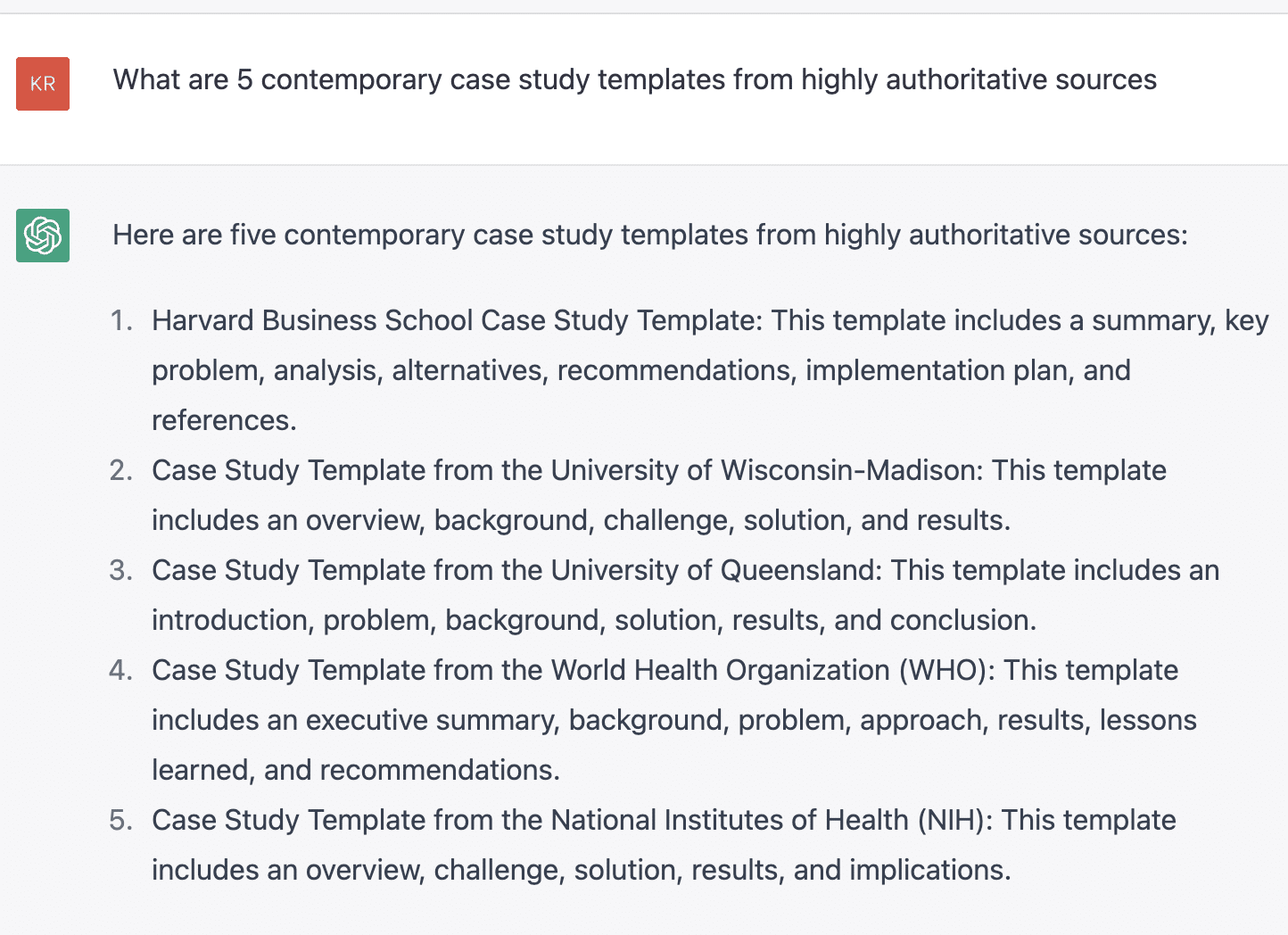
Prompt: “What are 5 contemporary case study templates from highly authoritative sources?”

Case study templates

I don’t hate these results, but I need more direction to make this usable and actionable. 

Prompt: “Which of these case study templates are best for a 1500-word article on link building?”

link building case study template

I don’t know if I completely believe this, but I’m no quitter.

Prompt: “Write an outline for that article about using ChatGPT for link building, using that template.”

ChatGPT outline

This isn’t a lousy outline for less than 5 minutes of work. Although it requires the touch of a subject matter expert (SME), and the headings could use some SEO love.

Let’s follow this structure for my article and see how it goes.

Case study overview

The importance of using ChatGPT for link building 

After using ChatGPT for research and testing it with my team, the business case for ChatGPT is to:

  • Build a deeper understanding of specific tactics and tools.
  • Narrowly focus the direction of efforts.
  • Build efficiency in research, planning, and on-site content for earned links.

Introduction to ChatGPT as a potential link building tool

ChatGPT is like a junior SEO specialist who reads a lot. They may not have the experience and context to understand a technique’s impact, but you can identify many great ideas with the right prompts. But I guess that’s just being a manager and leader.

The ideal scenario would be that the entire link building process could be automated in a way that was 100% compliant with Google’s link spam guidelines and have a short-term impact that drove 3:1 ROI. 

However, the realistic application is it can save time and resources at various stages of a known process or help with rapid brainstorming of new link building ideas.

To use the tool, you’ll need to develop your own prompts. This clever graphic from Rob Lennon provides a robust structure to get the most useful responses.

Anatomy of a ChatGPT prompt

You don’t need to use this structure for every prompt. But as you’ll see below, a good prompt structure is helpful to uncover insights that could have taken much longer to find otherwise.

Current landscape of link building

Which link building technique should you use? This is as polarizing a question as presidential elections, at least for an SEO geek. 

Here are significant considerations when creating a link building strategy.

Link building ethical considerations: A wide range of tactics can be used. All of them have different levels of risk. If you’re concerned about link building ethics, you will want to stay up-to-date on Google’s perspective on links.

Google’s POV: Google’s John Mueller suggests building great content and telling people about it through social, relevant blogs and forums, and other online or real-world communities. 

I highly recommend you reference Google’s material on link building (especially if you’re in a Your Money Your Life (YMYL) niche): 

Link building techniques: These can be categorized into paid, organic/natural, and earned links. Backlinko’s list of link building strategies can help you gain direction. I highly recommend customizing your own email templates for outreach.

Here is a general overview of the common approaches.  

  • Paid links: Guest posting is popular. This includes creating content for third-party blogs or trade sites, which can be paid or organic. There is a wide range of metrics, quality standards, and contextual considerations when selecting which site to spend time working with for a placement.
  • Link earning: Creating content that has a unique value proposition (UVP) or a unique selling proposition, and then sharing it with a community to see if they will like and share it. Basically, going viral. It’s a lot like product marketing but with content.
  • Organic/natural:
    • Digital PR: Using tools like HARO to secure links through journalist outreach.
    • Link reclamation: Includes unlinked brand mentions or unlinked thematic mentions (i.e., finding articles with a contextual but unlinked keyword).
  • Niche tactics: Then there’s a variation of tactics like infographic distribution, unique data-driven articles, coining new phrases, widgets and calculators, and so much more.

The limitations of current link building techniques

Following ChatGPT’s template results in a wordy article, so let’s keep the rest of this simple.

No link building tactic is guaranteed to work. They are all time-consuming. The economy of link building is the biggest limiting factor.

Limitations of ChatGPT

Refer to this list of limitations from OpenAI before using ChatGPT for real business applications. 

Limitations of ChatGPTa

Earning links is among the hardest facets of an SEO or content marketing program. 

After building thousands of links, I’ve found the biggest challenges with running a scalable and impactful campaign include the following:

Evaluating site quality

Content and site quality are critical to SEO. Algorithm updates like Penguin and the December 2022 link spam update powered by SpamBrain make it so. 

65% of marketers use third-party metrics such as domain authority, domain rating, or page authority to evaluate site quality which Google does not use. Instead, the search quality rater guidelines point to factors such as contextuality, reputation, usability, and the quality of the site or contributors as an entity for such evaluations.

Also, note that this document was updated on December 15, 2022. ChatGPT has no information about recent changes because it is not connected to the internet. 

Evaluating impact 

Determining which factor drove your KPIs forward is difficult on both domain and page levels. Google has stated it devalues links to a site and doesn’t demote the site if it’s caught performing link spam. This creates major challenges for analysis.

Scalability

On-site content creation and off-site link research, prospecting, and outreach are mind-numbingly resource-intensive and time-consuming. 


Get the daily newsletter search marketers rely on.

Processing…Please wait.


Looking at the challenges of link building, I've found a few applications to solve these massive hurdles. 

Evaluating site quality

Unfortunately, ChatGPT can't evaluate site quality for you. This simplifies the process of interpreting Google's guidelines on site quality. 

Prompt: "Create a list of criteria to evaluate site quality for link building against Google's Quality Quality Evaluator Guidelines."

Quality criteria

Let's dive deeper.

Link building prompt - elaborate

Well, well…

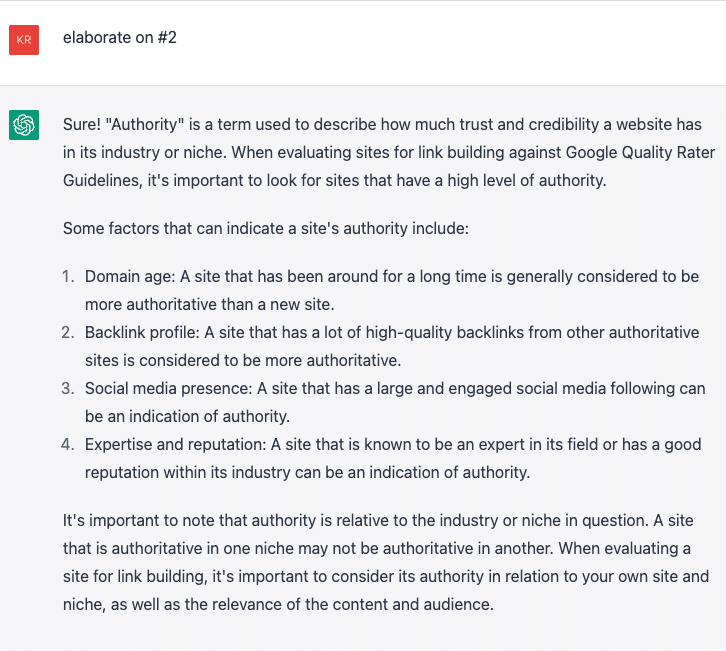
But how do you identify expertise and reputation? I asked to "elaborate on expertise and reputation" and got:

Not very algorithmic, but for those who want to do link building that complies with Google's guidelines, this can be useful.

So let's get more specific and find software to help.

Link building tools

OK. Now I need a step-by-step process to use a tool. Let's use Ahrefs.

Step by step process for link evaluation

This does have some initial value and will provide direction for people new to using Ahrefs for link building, but this is great for initial direction. 

Evaluating impact 

In the same line of thinking, ChatGPT can give you some tool recommendations.

However, with general prompts like, "What tools are best to evaluate a site's ranking improvement in Google."

I used the word "best" which is not the most concise language, but let's see where it takes me.

Best tools for link building

I love Serpstat, so let's see if I can quickly identify a process to evaluate my keyword rankings.

Link building process using Serpstat

There you have it. I'm certain we can go much deeper into niche tools and processes with these types of prompts.

Scalability

I've been attempting to completely automate natural link building techniques, to no satisfaction. 

You know what would be amazing? If ChatGPT could help with broken link building.

ChatGPT - broken link prompts

This looks amazing at first glance and would have saved me hours of research, but none of these links are useful. 

I thought this would be clever if it worked, but this list was of internal links or to pages that had no links pointing to them. This doesn't help with broken link building.

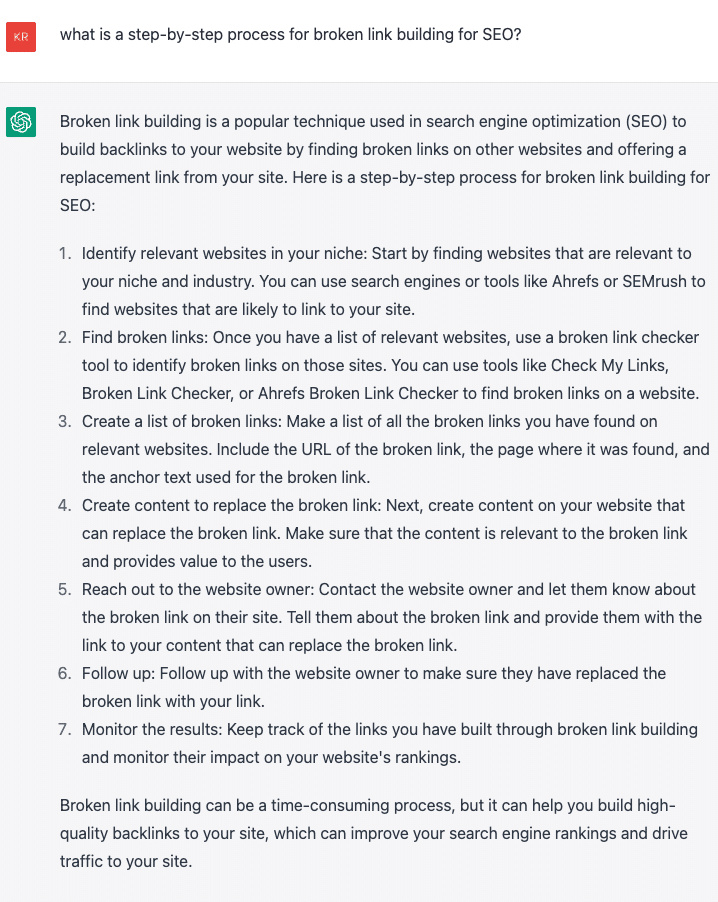
However, with some prompting, I was able to identify a tool (Ahrefs again) and get answers for how to find the broken link reports...

Link building SEO prompt

And:

Not bad.

You can also save time with "act as" and the "step-by-step" prompts. 

Let's see If I can use these prompts to understand John Mueller's perspective on link building and have Brian Dean write me a strategy.

First, let's see what Mueller has to say about how to build links.

ChatGPT Mueller

Now I need to design a link building program with a strong foundation in great content (The response above suggests creating viral content, which is its own article). 

Prompt: "Write me a strategy for SEO link building as if you were Brian Dean from Backlinko." 

I'll take this and see if I can make it more actionable.

The step-by-step hack doesn't provide the exact steps to the point where I can follow just this plan, but I was able to narrow down and find some direction in under 5 minutes of prompting. 

Content marketing and link building are different from programming. There isn't much published research from reliable sources to train against. 

When you have people to reference, known strategies and specific tools or processes, ChatGPT can potentially reduce research time.

I hope to see ChatGPT provide more valuable automation and scalability. But right now, it's a great assistant to shorten the research and planning process. 

Consider creating your own prompts to show you how to use general SEO/link building specific tools or quick references for established processes.

The post ChatGPT for link building: A primer appeared first on Search Engine Land.


via Search Engine Land https://ift.tt/kPvFwxY

Optimizing local landing pages for search: 8 best practices

For businesses with physical locations, creating landing pages for your city or town is a great way to boost local visibility.

Local landing pages show your potential customers and Google where your physical locations are, the specific areas you serve and the products or services you offer.

The content of these pages can include relevant information about the specific city or town you’re targeting and the business keywords you’re trying to rank for. 

Location pages can also be used as Google Business Profile URLs or PPC ad, email and even online directory landing pages. 

Done right, local landing pages help build trust and authority for your business in the communities that you serve. 

Let’s talk about some best practices and tips for correctly optimizing local landing pages.

1. Avoid duplicate content

Gone are the days when you can use the same content on multiple local landing pages.

With Google SpamBrain and the helpful content update, each page must have unique and truly helpful content. You can’t swap out the city name or a few pictures and then call it good.

As Google’s John Mueller pointed out, these local landing pages with duplicated content can be considered doorway pages, which are against Google’s guidelines.

Don't duplicate content

For instance, an H1 like “Best Plumber in Chicago, IL” will read like a big red flag to Google.

This is especially true if you have other pages with the exact same content with the word “Chicago” swapped out for the cities of Evanston, Naperville, Oak Park, etc. 

A more useful H1 would be:

  • “Do You Own A Business in Omaha? Then You Need An Accountant You Can Trust”

These pages are not just for you to try and rank higher on Google for keywords and the city name. 

If you don’t take the time to create worthwhile content, then it’s not worth creating these pages in the first place. 

You must bring value to the location page – something that the end user will find worthwhile and useful. (If you do that, Google will reward you.)

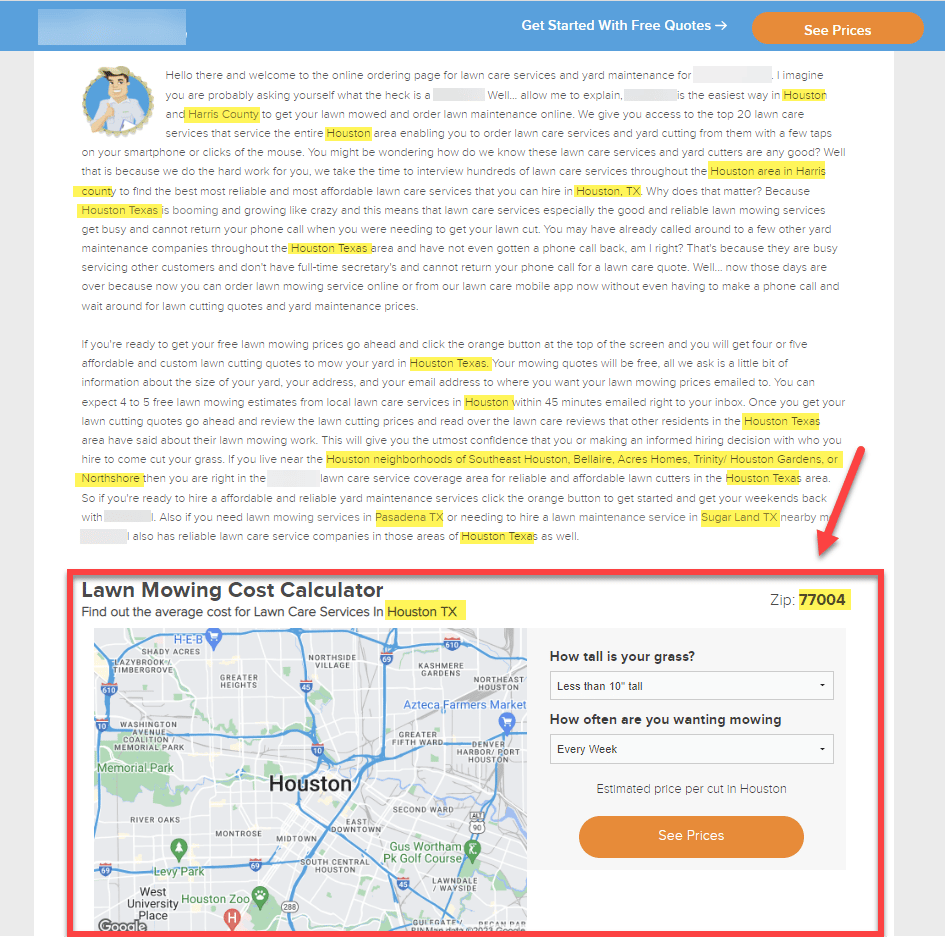
To start, let’s look at an example. The lawn care company below included a convenient lawn mowing calculator on their local page specifically for the Houston, TX area. 

Lawn mowing calculator

Since estimates likely vary depending on the city and location, this is useful. 

They also included content on the page specifically explaining their services for Houston and the surrounding areas and discussed how their quoting system works. 

Content like this is beneficial for people in the Houston area because they’re getting accurate quotes for their locality.

2. Don’t spam your content 

Keyword stuffing has been a no-no for a long time, but you still see it in action – especially in poorly designed local pages. 

Do not overuse keywords on your local page. Using keywords in your H1, like “Best Lawyer” or “Los Angeles Landscaper,” screams of spam.

When paired with keyword-stuffed content, it’s a recipe for Google’s SpamBrain and helpful content update to penalize your entire site as being “unhelpful.”

You don’t have to stuff your page with keywords for Google to know what your page is about. It’s smart enough to figure this out with just a few subtle clues.

3. Optimize URLs and images

Be sure to use SEO best practices with your URLs. 

When possible, keep the URLs as short as feasible. But if you can include the product or service and the city, do so.

  • http://website.com/lawncare-cedar-rapids 

Maintain a proper URL structure and use hyphens to separate the words. No funky characters, underscores, squiggly lines or question marks. 

Also ensure that your images are SEO-friendly. Don’t just upload photos with the gibberish file name your camera or smartphone set. 

Rename each one to meaningfully describe what’s in the image and include the city name (if appropriate.) Again, use hyphens to separate the words. 

For example, before uploading an image of a bathroom remodel that you did in Oklahoma City, you could rename it to, “bathroom-remodel-oklahoma-city.png.”

Remember to add alt tags to your photos when you upload them to your landing page, too.

Use the keywords you’re trying to rank for and the city name, but make sure you’re actually describing the picture. (That’s the whole purpose of the alt tag after all.)


Get the daily newsletter search marketers rely on.

Processing…Please wait.


4. Write location-specific information about your business

It's best if you can write details on your local page that relates to your business. That will sound natural and provide useful information to the reader, which Google will recognize as helpful.

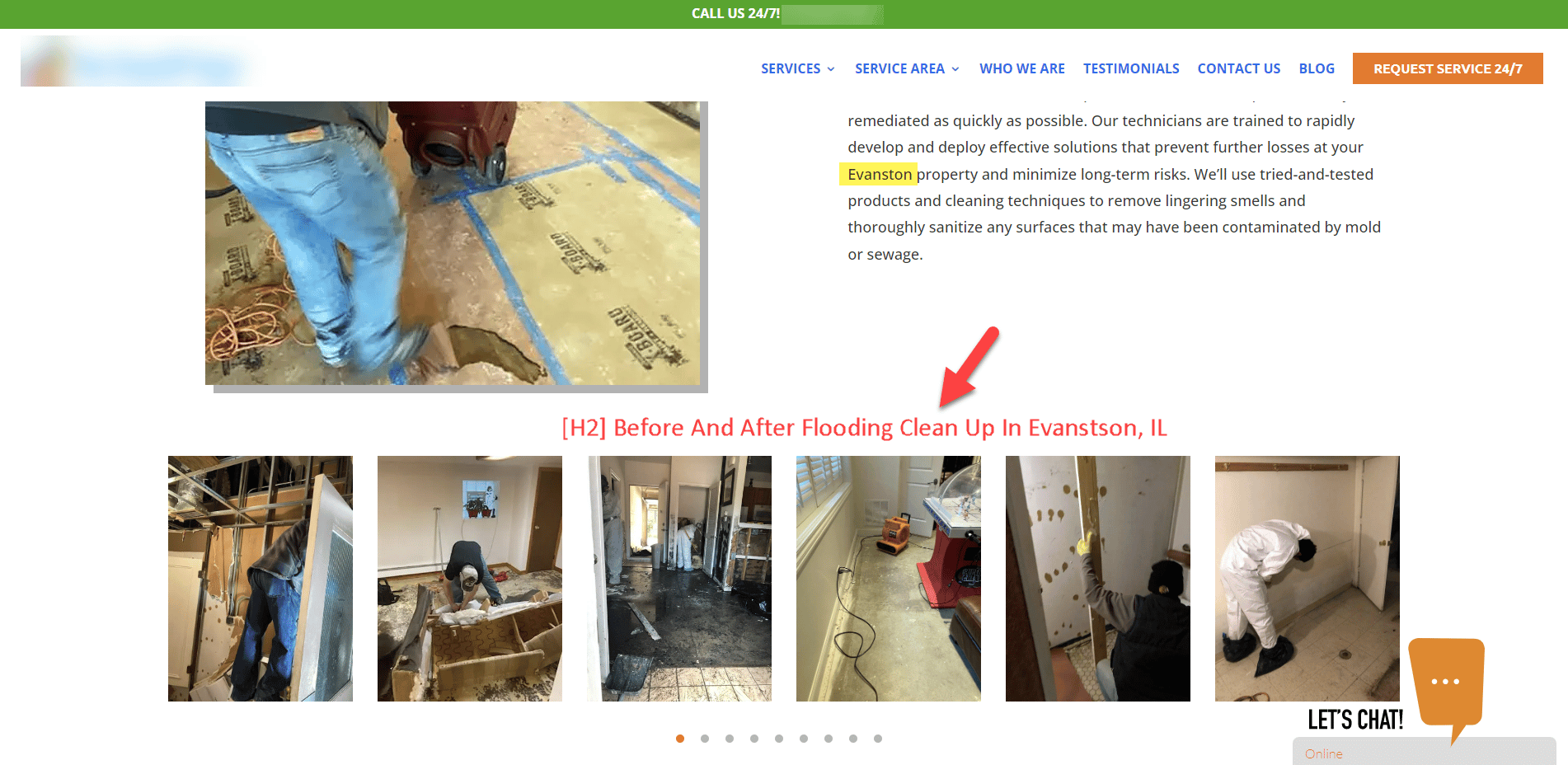
One way to do this is to add "Before" and "After" pictures optimized for keywords and the city name.

The screenshot below is from a restoration service company's local page targeted for Evanston, IL.

Include before and after pictures

While they included before and after photos, they failed to mention that these photos were taken at homes in the said area – a missed opportunity.

They could've used an H2 titled "Before and After Flooding Cleanup in Evanston, IL" above the images.

Another way to work in your content naturally on a local landing page is to talk about the history of the community or how the community needs your particular service. 

In the example below, the plumbing comany shares the history of the city and how the city was annexed even before gas and sewer lines were needed in the homes. It strategically created an anchor text link to their gas and sewer line services page.

Work in your services naturally

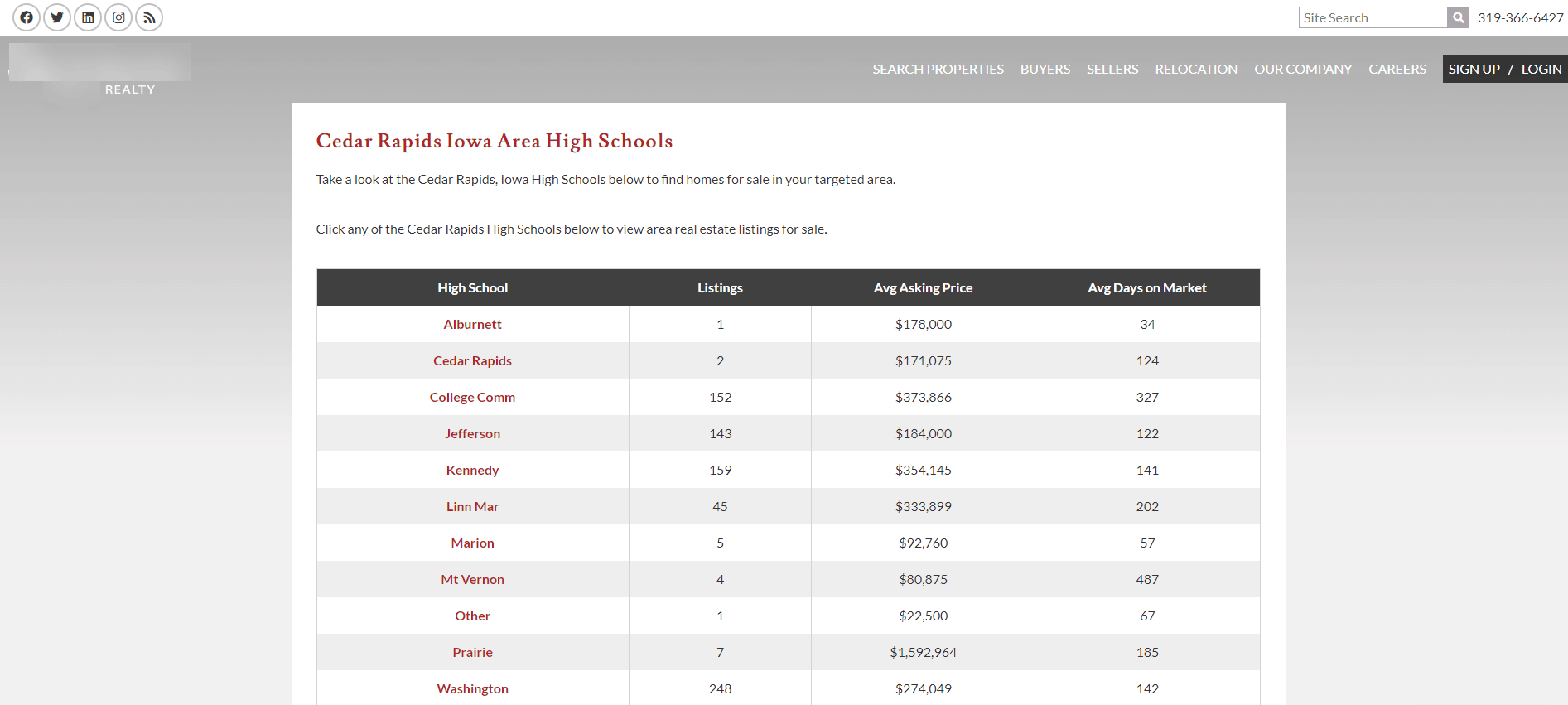
In the real estate industry, city pages can highlight the schools in the area, popular restaurants, shopping centers and grocery stores, among others. Let potential home buyers know what the local cities and towns have to offer.

Area High Schools

Alternatively, you can use case studies or work examples to get city names into your local pages.

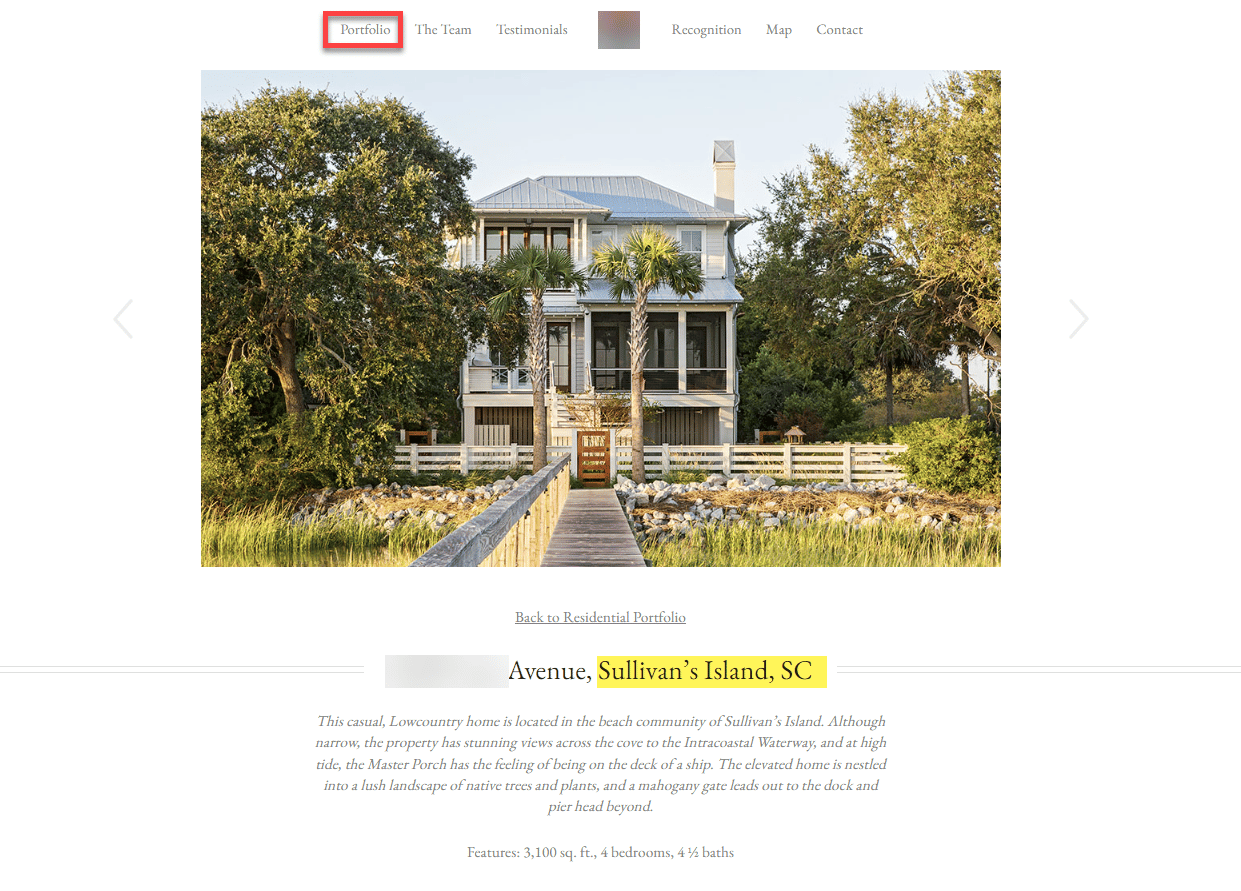
This architecture firm showcases work they've done in various towns and cities.

local use cases

What a beautiful way to showcase their architectural designs and get the city names into their various pages.

Local landing pages don't have to be boring. Use your creativity when it comes to writing your city-specific content.

Figure out how to use the keywords you're targeting and the city names naturally.

5. Take original photos of the locality

Tour the towns or cities you're writing about and take your own pictures. It can be the town square, the parks, the Chamber of Commerce, local entertainment, restaurants, the schools – you name it. 

Original images show that you are part of the community versus using some stock photos. Again, be sure and optimize those photos for search purposes.

6. Highlight local charities and organizations you support

Everyone loves businesses that support the communities they work and live in.

If you support local charities or organizations in areas you serve, you should mention them on your individual city-specific pages.

For instance, it doesn't cost much to supply a local animal shelter with 20 bags of cat or dog food every month (and you'd be doing a great thing). 

Just contact the shelter and tell them what you'll commit to donating monthly and ask if you can include their logo and information about their organization on your local page. 

Also, ask if it'd be OK for them to include your company's logo on their website and a link to your local landing page as a simple thank you for the donation. Many charities are willing to do this.

Are you into sports and kiddos? How about sponsoring uniforms for a youth soccer or baseball team? Add your logo to their uniforms and supplement the cost of the uniforms. 

Again, include the team logo or information about the team on your local landing page and see if the sports organization will add you as a sponsor on their website and link to your local city page. 

Community spotlight

Not only are you showing website visitors that you're supporting the city, but you're getting valuable, quality backlinks in the process.

7. Include logos and details about local professional organizations you belong to

Show off what you are doing at a local level – whether it's the local Chamber of Commerce, the city's SCORE chapter or the local newspaper or community business website.

chamber of commerce logo

Wherever possible, see if you can get a backlink.

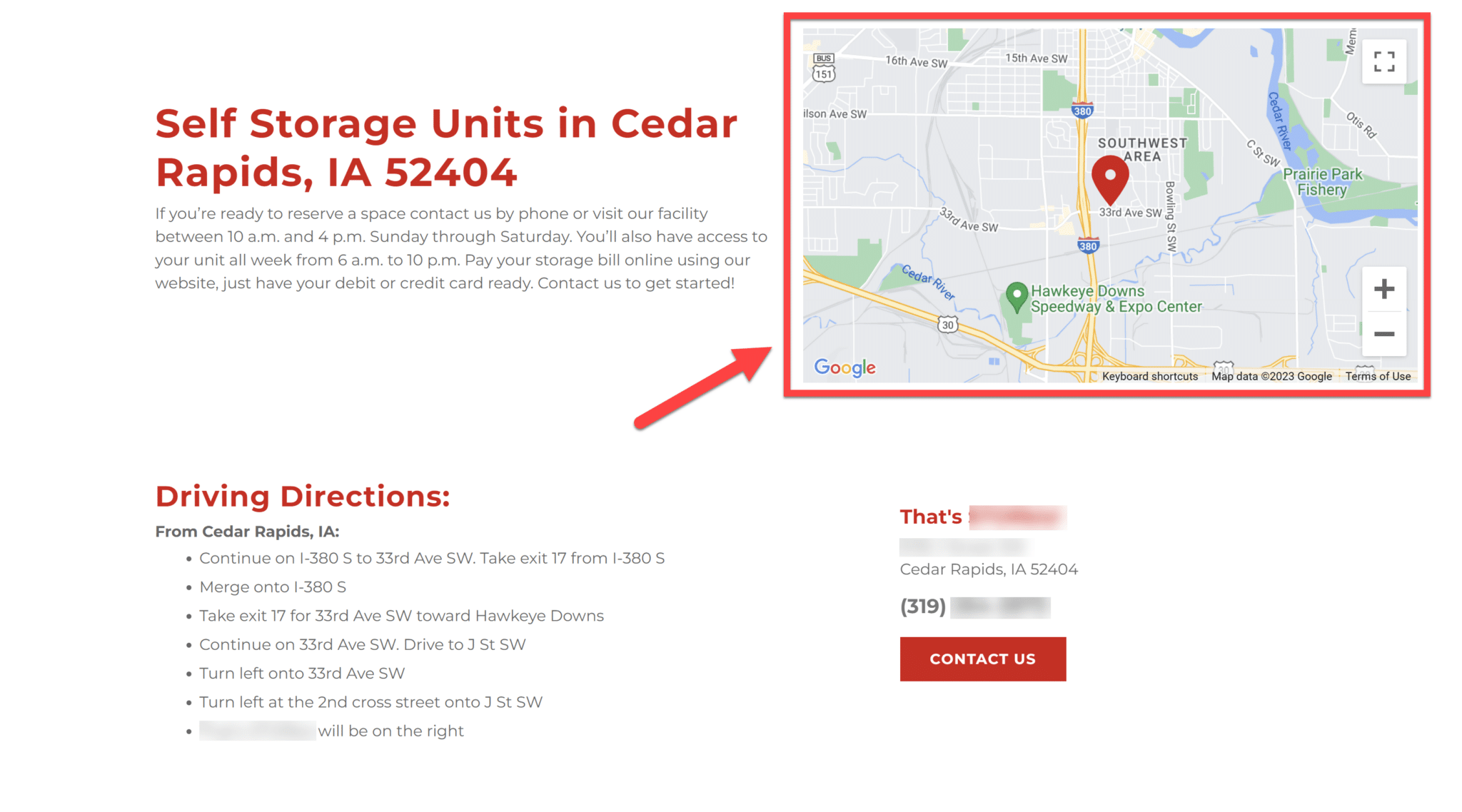
8. Include your address and embed Google Maps

If you have a physical location in the city, be sure to put your address and phone number on the landing page.

It's also helpful to embed a Google Map. That way customers can easily get driving directions to your location. 

embed Google Maps

If you embed the Google Map properly, the map can also show your brand and your Google Business Profile reviews in it.

If you have a service area business, you can benefit from a Google Map, too. To embed a service area Google Map, just search for your Google Business Profile on Google Maps.

Service area business

Click on "Share" and then "Embed a map." Next, simply copy the HTML code and paste it on to your web page.

Service area - GBP

Leverage your local connection

Creating landing pages for your city or town is a great way to reach local customers.

A good local landing page includes relevant content about your company, the city or town you're serving, and and how they interact together.

Local landing pages with unique and helpful content can bring you closer to your community and put you in Google's good graces.

The post Optimizing local landing pages for search: 8 best practices appeared first on Search Engine Land.


via Search Engine Land https://ift.tt/sM7OJWf

Tuesday, 28 February 2023

Build a winning marketing attribution framework by Cynthia Ramsaran

data-driven attribution

Equipping marketing leaders with the skills, tools and data they need to prove ROI is like setting out to sea on a fishing expedition.

Rather than distributing equal bait to each rod of a marketing campaign despite not knowing which will produce the most bites, marketing attribution teaches marketers to assemble the best combination of bait before casting its line into a sea of prospects.

Register today for “Build a Winning Marketing Attribution Framework,” presented by Chanel99 and learn how to overcome the top three challenges in marketing attribution.


Click here to view more Search Engine Land webinars.

The post Build a winning marketing attribution framework appeared first on Search Engine Land.


via Search Engine Land https://ift.tt/M6pG0xc